The SABRENT EC-DFLT is a simple way to connect a loose 2.5- or 3.5-inch SATA drive to a computer for file access, transfers, or maintenance.
This sabrent hard drive docking station review looks at its broad SATA compatibility, USB 3.0 connection, power needs, and the limits buyers should consider.
SABRENT EC-DFLT Review Summary
The quick verdict
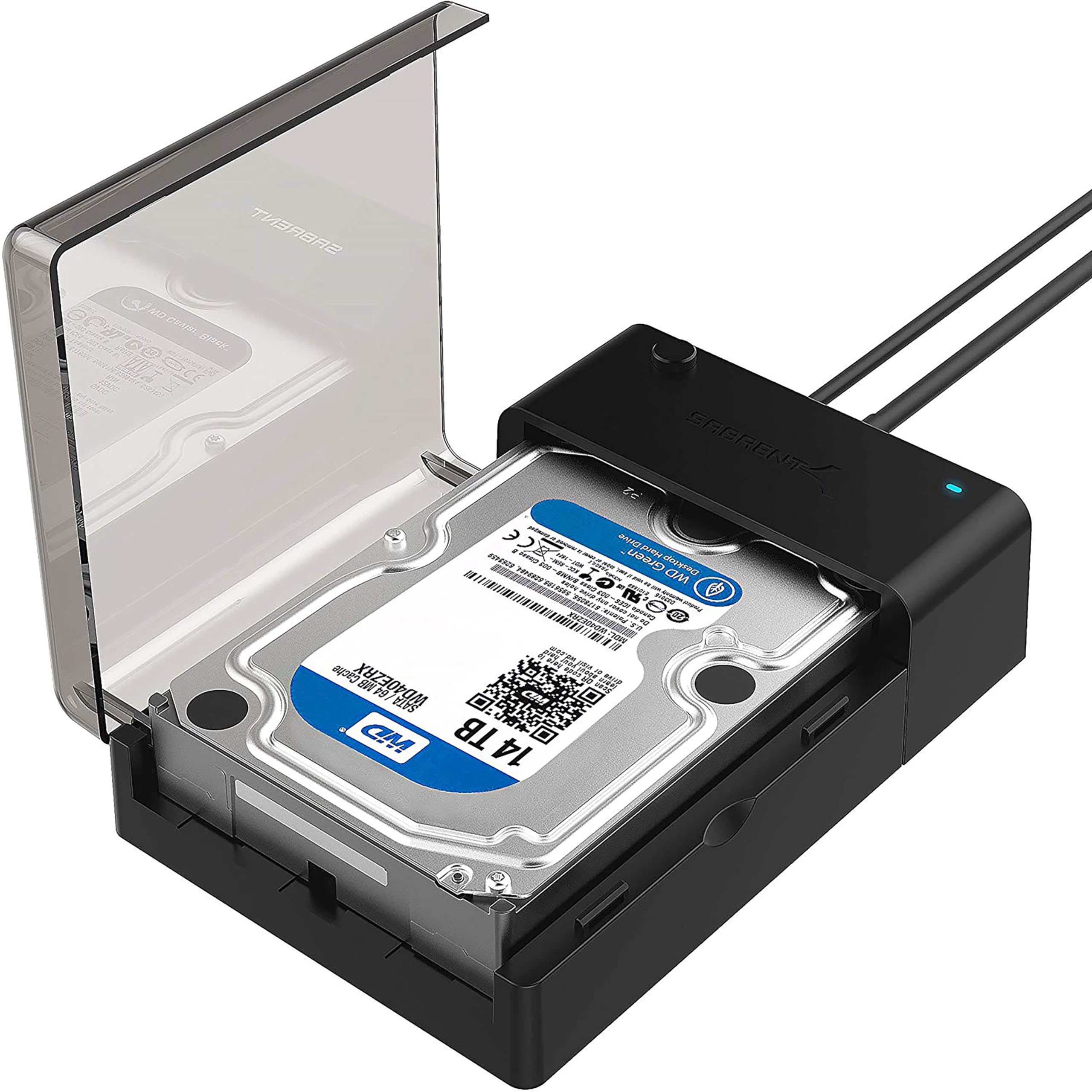
37,000+ ratings
Read Amazon ReviewsSABRENT EC-DFLT
A straightforward dock for accessing 2.5- or 3.5-inch SATA drives over USB 3.0, with UASP support and an included power adapter.
- Connects 2.5- and 3.5-inch SATA HDDs and SSDs, including SATA I, II, and III drives.
- Uses an included USB 3.0 Type-A host cable; direct connection to a USB 3.0 computer port is recommended for stable operation.
- Supports UASP when paired with a UASP-capable host system.
- Typical HDD transfer speeds are given as 100–160 MB/s; SSD speeds vary.

Pros
- Handles both common SATA drive sizes and hard drives as well as SSDs.
- USB 3.0 Type-A connection is easy to use with compatible computers.
Consider before buying
- Limited to SATA drives; it does not support IDE/PATA, M.2 NVMe, M.2 SATA, SAS, or USB-connected drives.
- A 3.5-inch drive requires the included adapter and a wall outlet, so the setup is less portable than a bus-powered-only accessory.
Read the full review summary
The EC-DFLT is built around a useful, uncomplicated job: insert a compatible SATA hard drive or SSD, connect the dock to a USB 3.0 Type-A port, and access the drive without fitting it into an enclosure.
It supports SATA I, II, and III drives in both common sizes, and UASP can help make transfers more efficient when the computer supports the protocol.
Plug-and-play operation across Windows 10 and 11, macOS, and Linux keeps setup simple.
This design suits people who occasionally retrieve files from bare drives, move data between computers, or connect a drive temporarily for backup work.
It is less suited to users working with M.2 or IDE drives, or anyone who needs a multi-bay workflow or offline cloning.
The included 12V adapter matters for 3.5-inch drives; a direct USB 3.0 connection is also the sensible setup for stable use.
The buying factors
SABRENT EC-DFLT Scorecard
Editorial scores reflect listed features and buyer fit; they are not laboratory measurements or customer ratings.
Drive-format coverage
Supports 2.5- and 3.5-inch SATA I/II/III HDDs and SSDs, while excluding several other drive interfaces and formats.
Connection simplicity
USB Type-A host cable and plug-and-play support across major desktop operating systems make basic setup straightforward.
Transfer flexibility
USB 3.0 and UASP support are useful, though UASP benefits depend on a compatible host and SSD speeds vary.
Power practicality
The included adapter supports 3.5-inch drives, while 2.5-inch drives are generally bus-powered.
Drive access and status
Hot swapping and an activity LED help with routine access, but S.M.A.R.T. diagnostics are not supported through the USB bridge.
Specialized workflows
Its single-drive access role is clear, but the supplied features do not include offline cloning or multi-drive management.
Key Features and Specifications of SABRENT EC-DFLT
- Connects 2.5- and 3.5-inch SATA HDDs and SSDs, including SATA I, II, and III drives.
- Uses an included USB 3.0 Type-A host cable; direct connection to a USB 3.0 computer port is recommended for stable operation.
- Supports UASP when paired with a UASP-capable host system.
- Typical HDD transfer speeds are given as 100–160 MB/s; SSD speeds vary.
- Plug-and-play operation on Windows 10/11, macOS, and Linux, with no drivers required.
- Hot-swappable design includes an LED activity indicator; S.M.A.R.T. diagnostics are not supported through the USB bridge.
- Includes a 12V power adapter for 3.5-inch drives; 2.5-inch drives are generally bus-powered, though the adapter is recommended for stability.
Pros and Cons of SABRENT EC-DFLT
Pros
- Handles both common SATA drive sizes and hard drives as well as SSDs.
- USB 3.0 Type-A connection is easy to use with compatible computers.
- UASP support gives compatible host systems an additional transfer option.
- Plug-and-play support covers Windows, macOS, and Linux without driver setup.
- Includes the 12V adapter needed to power 3.5-inch drives.
Consider before buying
- Limited to SATA drives; it does not support IDE/PATA, M.2 NVMe, M.2 SATA, SAS, or USB-connected drives.
- A 3.5-inch drive requires the included adapter and a wall outlet, so the setup is less portable than a bus-powered-only accessory.
- USB hubs and USB 2.0 ports may cause intermittent disconnections; a direct USB 3.0 port is the recommended connection.
- The USB bridge does not support S.M.A.R.T. diagnostics, which may matter for drive-health workflows.
Who Should Buy SABRENT EC-DFLT?
Good fit
Consider the EC-DFLT if you want a compact, temporary way to access standard 2.5- or 3.5-inch SATA drives without installing them in a computer or enclosure.
Its mix of HDD and SSD support is practical for file retrieval, basic transfers, and occasional drive maintenance, while plug-and-play operation keeps the process simple across common desktop systems.
It is especially sensible if the drives you handle are SATA and your computer has a USB 3.0 Type-A port. For 3.5-inch drives, plan to connect the included 12V adapter to a wall outlet.
If you use SSDs and want UASP, check that the host system supports it; the feature depends on both ends of the connection.
Who should skip it
Skip this dock if your drives use IDE/PATA, M.2 NVMe, M.2 SATA, SAS, or a USB connection. Check the drive interface before buying, particularly when dealing with high-capacity enterprise drives, since compatibility may be limited.
Look elsewhere if your routine calls for diagnostics through S.M.A.R.T., simultaneous access to several drives, or a drive-to-drive cloning workflow. Those needs go beyond the features described for this single-drive access dock.
How the SABRENT EC-DFLT Fits a SATA Drive Workflow
Broad SATA support with clear boundaries
Support for 2.5- and 3.5-inch SATA I/II/III drives covers many familiar laptop and desktop drives. The important buying step is matching the drive interface: similar physical size does not make an M.2, SAS, or IDE drive compatible.
Buyers with enterprise drives should confirm their exact drive compatibility before relying on the dock.
USB 3.0 and UASP depend on the host
The dock connects through USB 3.0 Type-A, and UASP is available when the computer supports it.
The product description gives typical HDD transfer speeds of 100–160 MB/s and says SSD speeds vary; these figures are context, not a guarantee for every drive or computer.
A direct USB 3.0 port is the recommended choice because hubs and USB 2.0 ports may lead to intermittent disconnections.
Power planning for desktop drives
A 3.5-inch HDD needs the included 12V adapter and access to a wall outlet; USB power alone will not spin it up reliably. A 2.5-inch drive is generally bus-powered, though the adapter is recommended for stability.
This makes the dock convenient at a desk, but buyers should account for the adapter when planning a portable setup.
A focused tool for temporary access
Hot swapping and an activity LED make routine drive access easier to follow, while no-driver operation lowers setup friction.
The USB bridge does not support S.M.A.R.T. diagnostics, so this dock is better viewed as a connection tool than a complete drive-management station. Buyers who need cloning or simultaneous multi-drive access should look for those capabilities explicitly.
Alternatives to SABRENT EC-DFLT
Hard Drive Docking Stations alternative
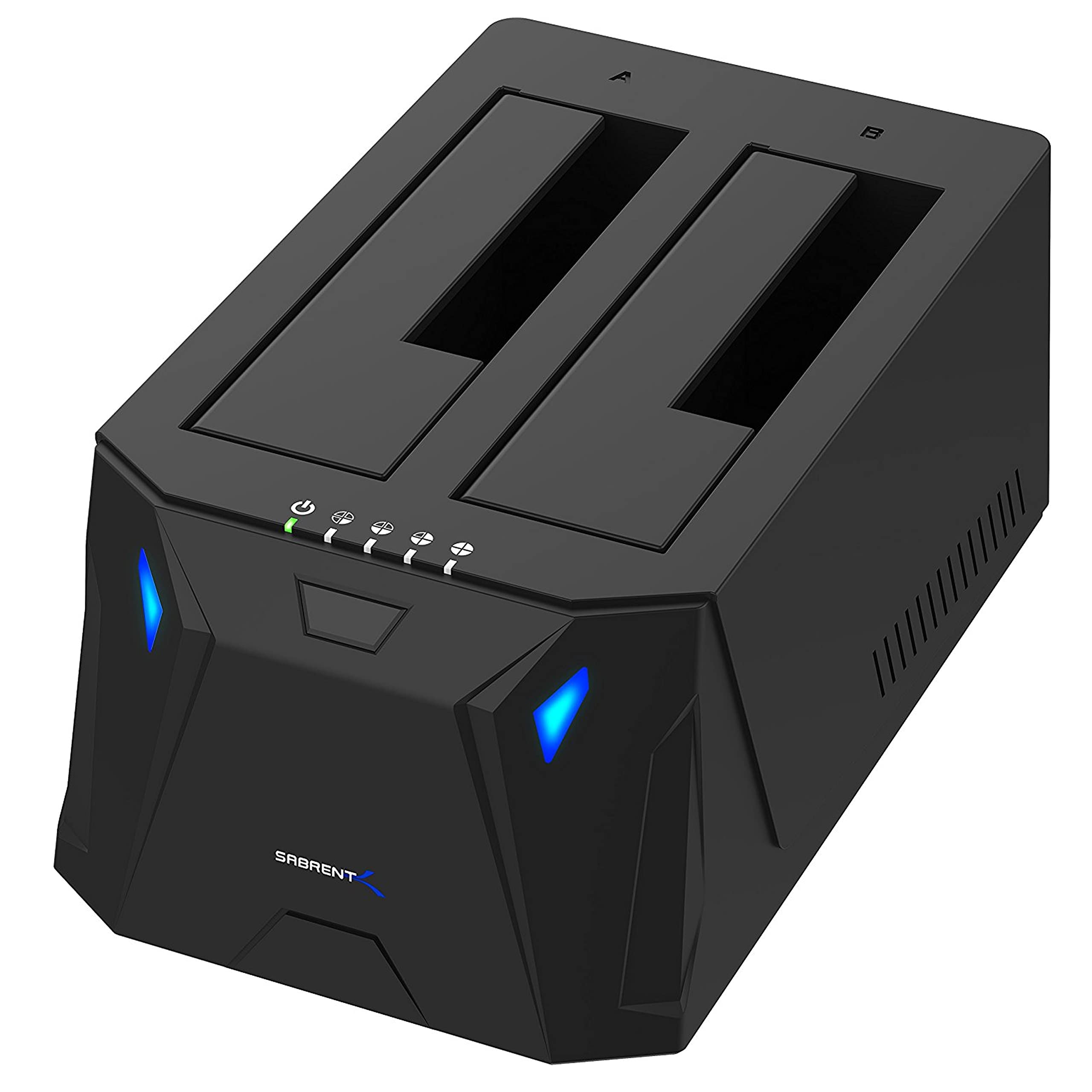
17,000+ ratings
Read Amazon ReviewsSABRENT EC-HD2B Dual-Bay SATA Docking Station
Choose the EC-DFLT for straightforward access to one drive and UASP support when the host is compatible.
Consider the EC-HD2B if two bays and offline cloning better match your workflow; confirm its stated drive-capacity limit against the drive you plan to use.
- The EC-HD2B supports standard 2.5- and 3.5-inch SATA drives, provides two bays, and includes offline cloning.
- Its description lists transfer speeds up to 5Gbps over USB 3.0 and cloning up to 60Mbps.
- The EC-DFLT connects one 2.5- or 3.5-inch SATA drive and focuses on direct USB access with UASP support on a compatible host.
Hard Drive Docking Stations alternative
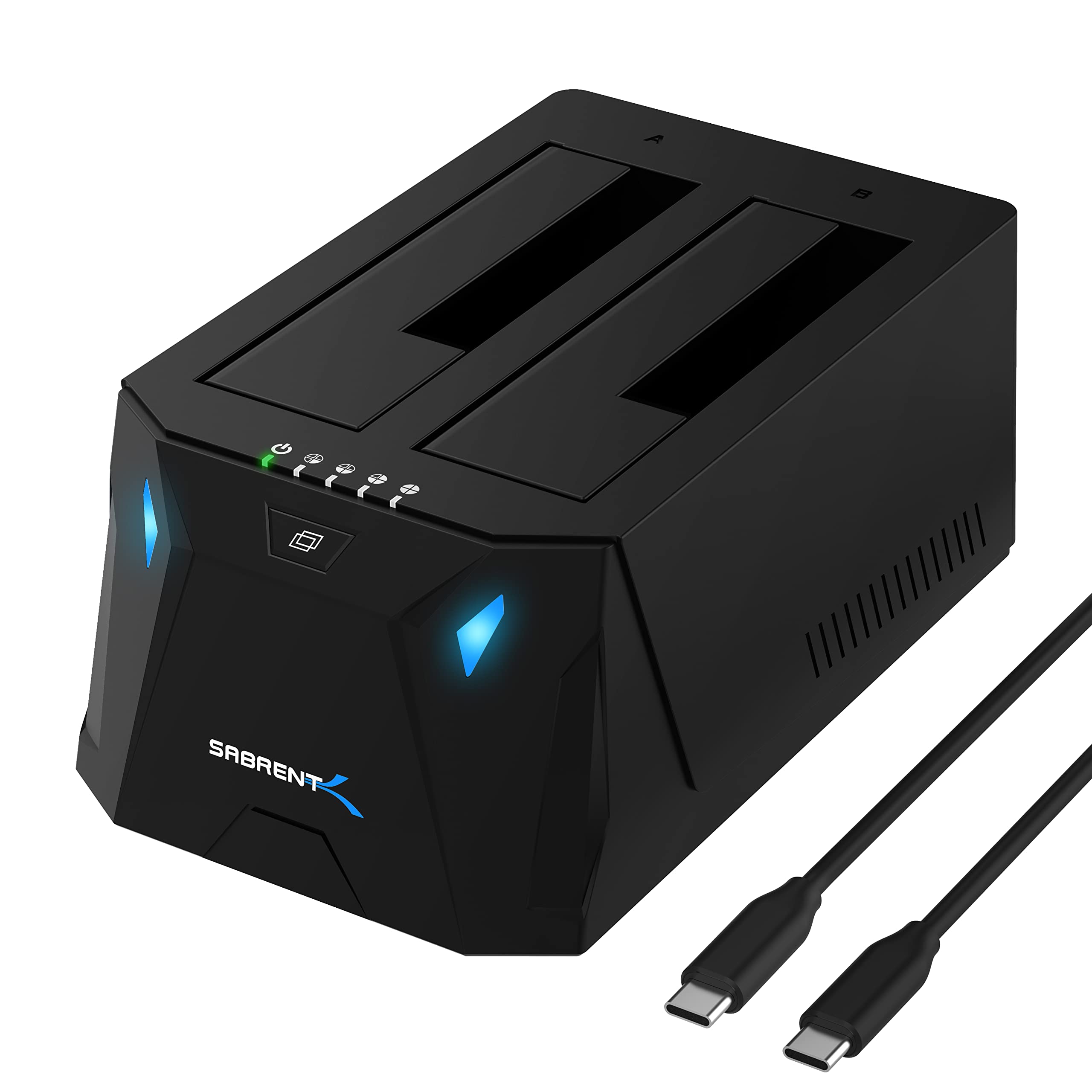
1,000+ ratings
Read Amazon ReviewsSABRENT EC-CH2B USB-C Dual-Bay Docking Station
The EC-DFLT is the simpler fit when you only need to connect one drive through USB Type-A. The EC-CH2B is a closer match for buyers who need two-bay access, offline cloning, or a USB-C host connection.
- The EC-CH2B offers two bays for 2.5- and 3.5-inch SATA HDDs, simultaneous read and write access, offline cloning, and a USB Type-C connection.
- Its description lists support for drives up to 20+TB.
- The EC-DFLT uses a USB 3.0 Type-A host connection and supports one SATA drive at a time.
Is SABRENT EC-DFLT Worth It?
The SABRENT EC-DFLT is worth considering when you need occasional, direct access to a standard 2.5- or 3.5-inch SATA drive.
Its useful strengths are broad SATA compatibility, USB 3.0 with conditional UASP support, and straightforward setup across Windows, macOS, and Linux.
Confirm the drive interface first, use a direct USB 3.0 port, and plan on wall power for 3.5-inch HDDs. If you need S.M.A.R.T. diagnostics, multiple bays, or offline cloning, choose a dock that specifically supports those jobs.
Your review at a glance
37,000+ ratings
Read Amazon ReviewsSABRENT EC-DFLT
A straightforward dock for accessing 2.5- or 3.5-inch SATA drives over USB 3.0, with UASP support and an included power adapter.
- Connects 2.5- and 3.5-inch SATA HDDs and SSDs, including SATA I, II, and III drives.
- Uses an included USB 3.0 Type-A host cable; direct connection to a USB 3.0 computer port is recommended for stable operation.
- Supports UASP when paired with a UASP-capable host system.
- Typical HDD transfer speeds are given as 100–160 MB/s; SSD speeds vary.